
Orbeat
Drum machine for iPhone & iPad
A drum machine in the round: build a groove on concentric rings, add swing, bring your own samples.

Free to start. Orbeat Pro is a one-time unlock.
Rated 5.0 out of 5 from 6 ratings on the US App Store
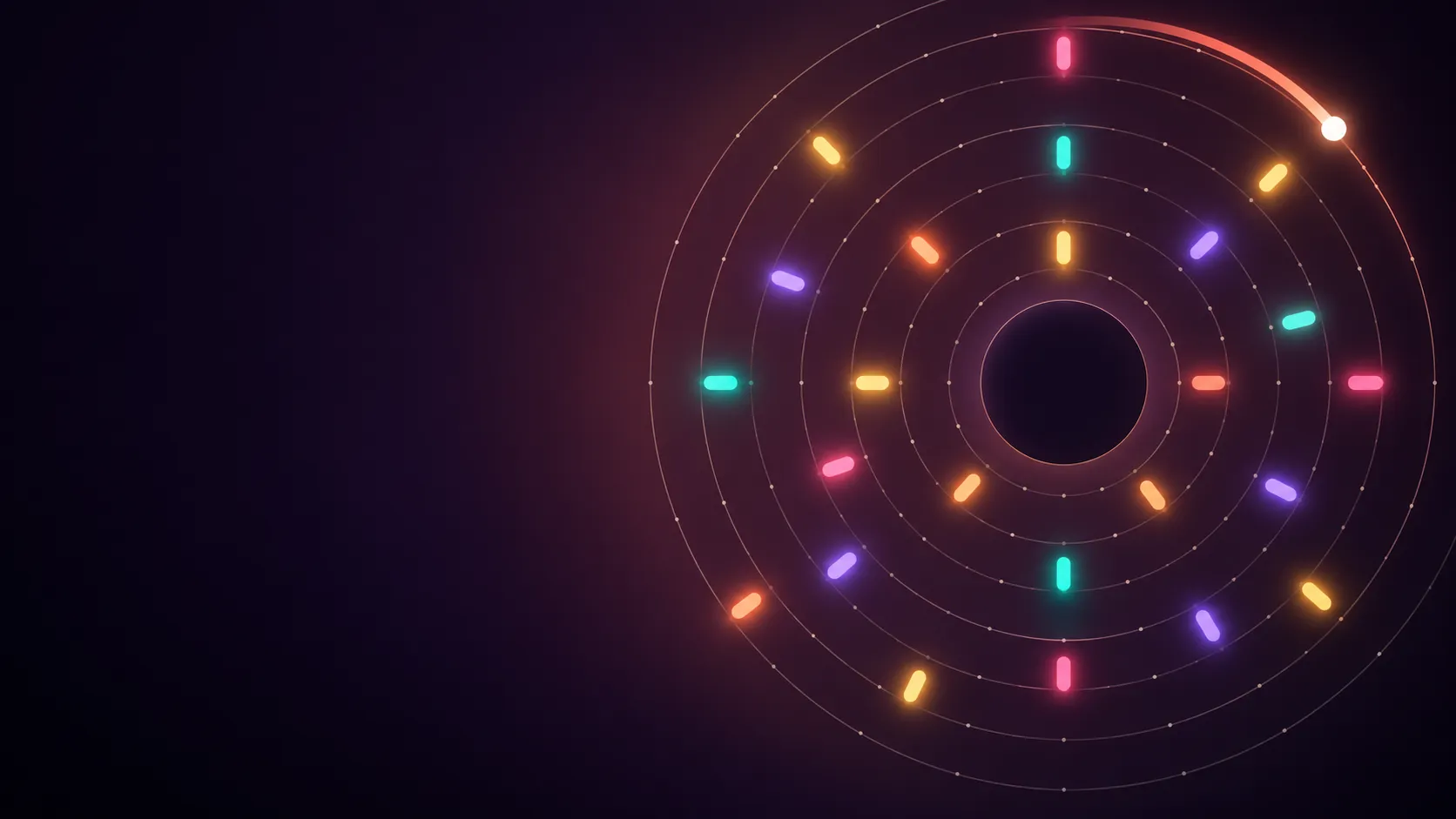
Most drum machines are a grid. Orbeat is a circle.
Step 1 sits at 12 o'clock and the playhead runs clockwise, which turns out to be exactly how Godfried Toussaint draws rhythms in his paper on Euclidean rhythms. That part got me.
An early mockup had two ways to run the rings. One hand sweeping them all, so they meet every bar and a 12-step ring just gets longer steps. Or same-length steps and a playhead per ring, so they drift. I took drift. 16, 13 and 7 only line up again after 91 bars.
It started with three kits: Classic, 808 and Lo-fi. The 808 was out again about ten hours later. All its character was sub-bass, which a phone speaker can't really play, so it just sounded like Classic with effects on. Acoustic took its slot and lives in the mids and highs instead. Swing counts per ring, not per bar, so on a 7-step ring the shuffle wanders around the bar.
And a lot of Orbeat now comes from the mailbox. Choke groups, saved MIDI maps and sending MIDI out all started as emails from people playing it. If you want something, write in.
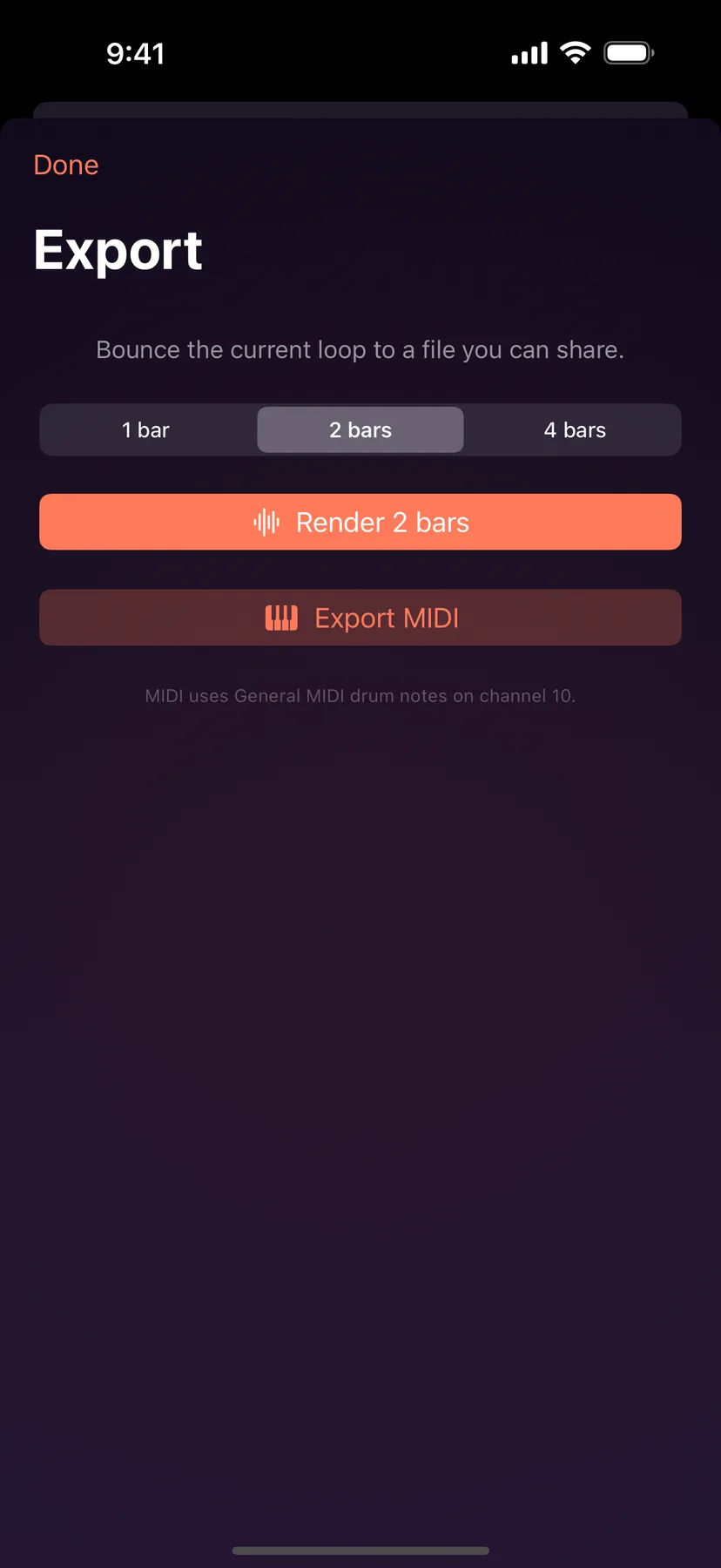
On iPhone & iPad
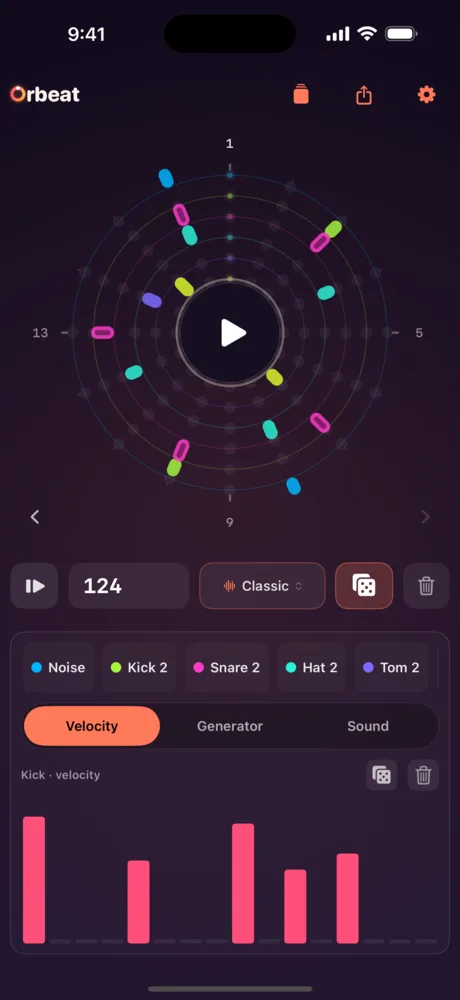
Lane page 2: Noise, Kick 2, Snare 2, Hat 2, Tom 2. 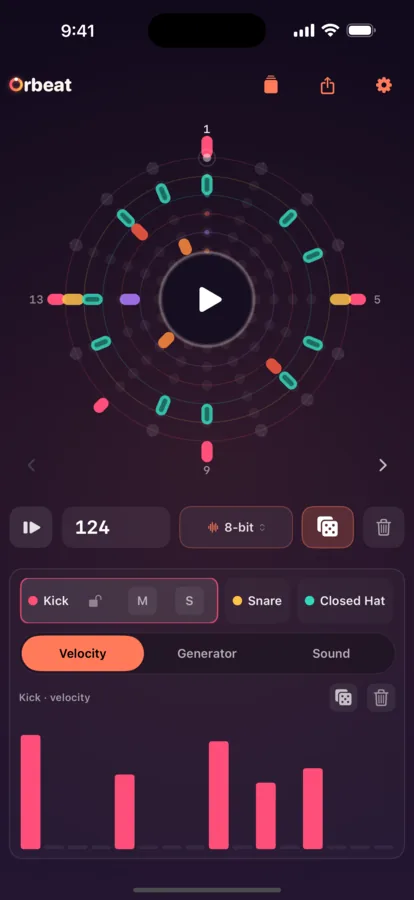
The 8-bit kit. 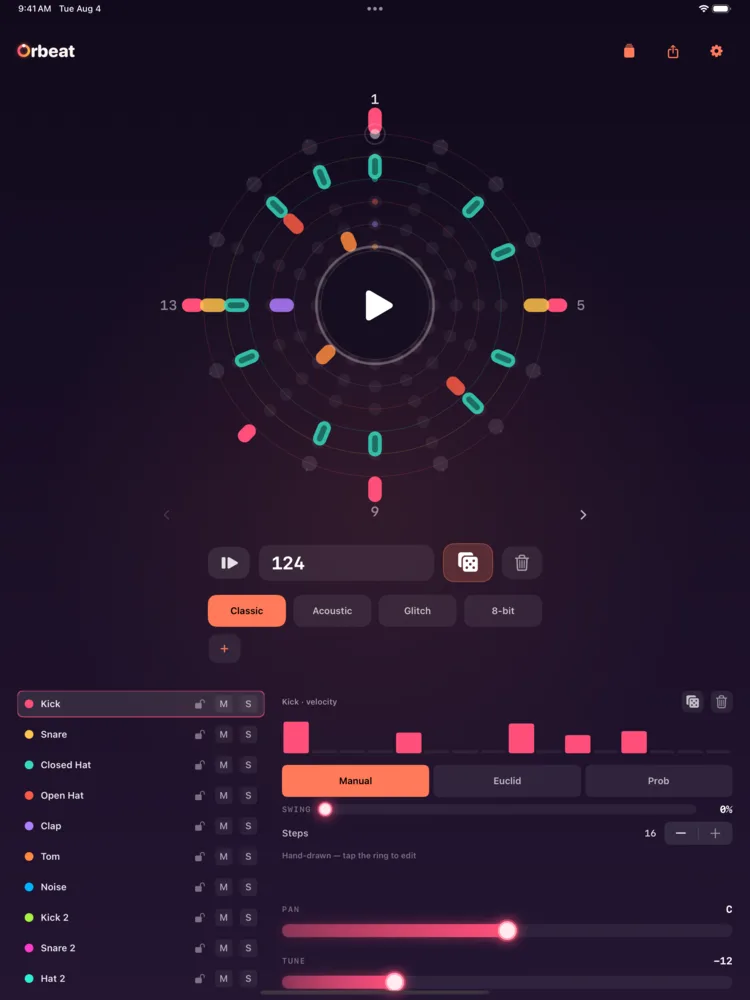
On iPad: kit pills, the full lane list with mute and solo, velocity, generator, pan and tune.
What each part does
Rings
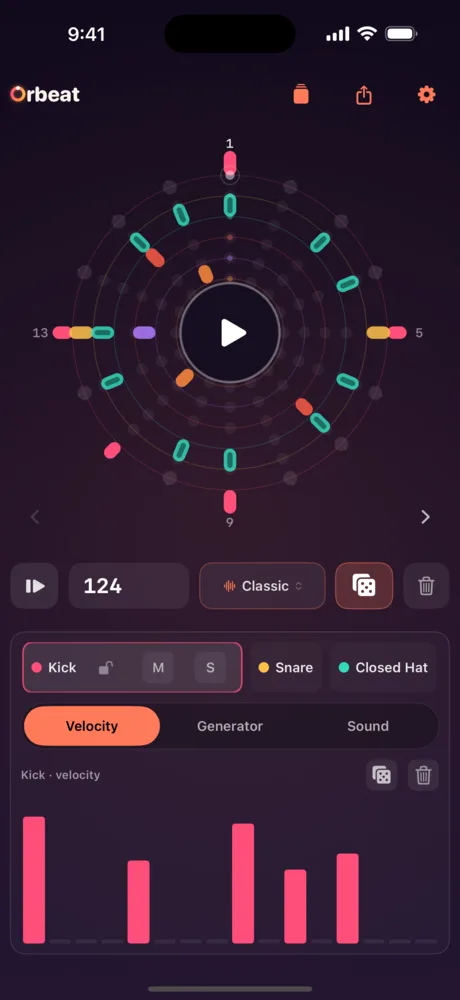
Step 1 sits at 12 o’clock. The playhead runs clockwise.
Play
Tempo
Shown here at 124 BPM.
Kit
Classic is selected.
Lanes
Kick, Snare, Closed Hat. The selected lane shows mute and solo.
Tabs
Velocity, Generator, Sound.
Velocity
One bar per step.
Details
- Formats
- Standalone and AUv3 instrument
- Runs on
- iPhone & iPad
- Requires
- iOS & iPadOS 16 or later. AUv3 needs a compatible host app.
- Price
- Free to start. Orbeat Pro is a one-time unlock.
- Version
- 1.4.1
- Updated
Play free. Unlock once. No subscription.
Get Orbeat
More from nono.audio


Orbeat